
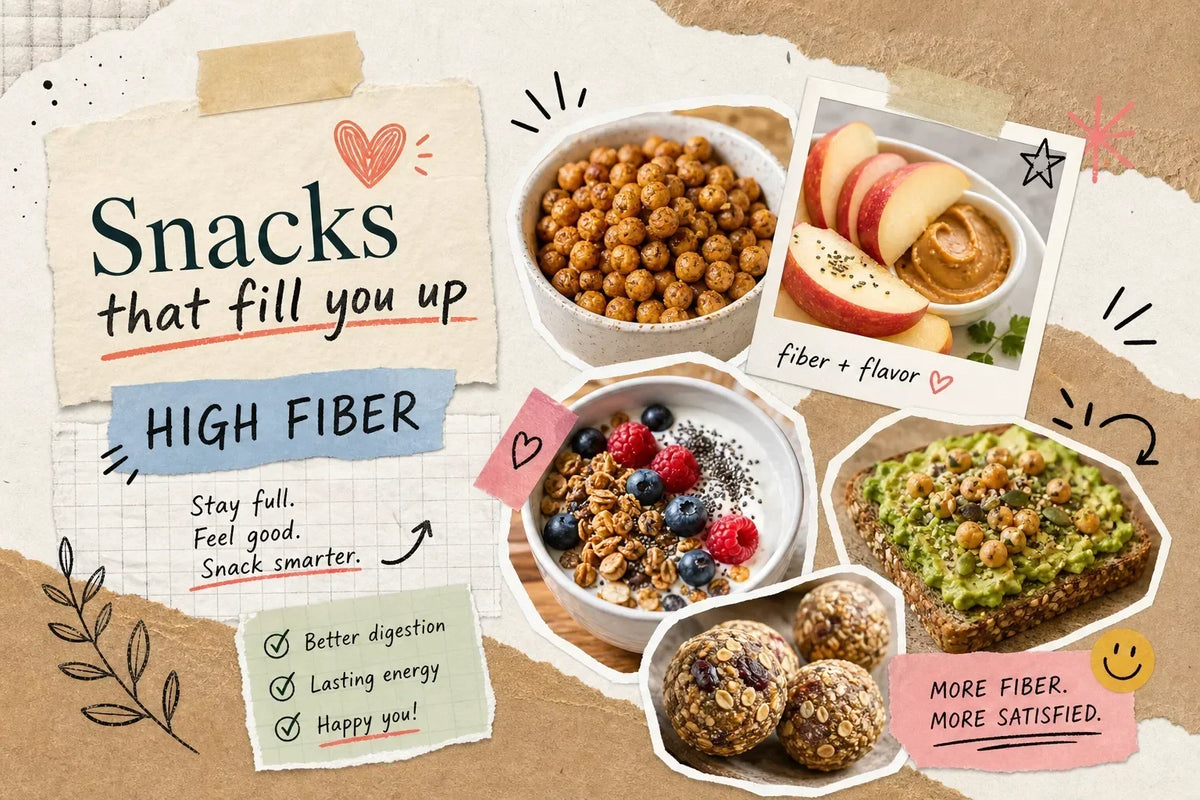
15 High Fiber Snacks That Keep You Full, Ranked by Dietitians
## Dietitian-Backed Whole Foods, No-Cook Recipes, and Clean Packaged Bars That Actually Satisfy
Most Americans get about 15 grams of fiber per day. That sounds reasonable until you realize it's roughly half of what dietitians actually recommend. That gap shows up as afternoon hunger crashes, sluggish digestion, and blood sugar swings that derail even the best intentions. Adding more high-fiber snacks to your day is one of the simplest ways to close that gap without overhauling your entire diet.
At Truce, we've spent years working on exactly this problem: how do you make a snack that keeps you full and supports your gut without a laundry list of artificial ingredients? The 15 picks below reflect that thinking. We’ve organized them into four convenient categories and ranked them within each group using the same criteria dietitians rely on: how much fiber they deliver per serving, how well they pair with protein or fat for lasting fullness, and how portable they are. Every option on this list is readily available or takes minutes to prep at home.
What Dietitians Actually Look for in a High-Fiber Snack
Dietitians generally consider 3 grams of fiber per serving a "good source" and 5 grams or more an "excellent source" [2]. That benchmark matters because most conventional snacks—crackers, granola bars, chips—clock in under 2 grams. When you're choosing snacks with fullness and gut health in mind, that 5-gram threshold is a useful filter to apply right on the label.
But here's the thing: fiber alone doesn't always cut it. Current evidence shows that fiber works best for blood sugar stability and satiety when it's paired with protein or healthy fat. Fiber slows carbohydrate absorption, but adding protein or fat slows digestion even further, producing that three-to-four-hour fullness window you're actually after. A handful of plain high-fiber crackers won't do what a fiber-rich snack paired with almond butter or complete protein will do.
The Best High-Fiber Snacks in Bar Form for When You Need Something Fast (Snacks 1–3)
1. Truce Bar (16g prebiotic fiber per bar)
If there's one packaged snack on this list to commit to memory, make it this one. Each Truce bar delivers 16 grams of prebiotic fiber (57% of the daily value based on a 28-gram DV reference) sourced from a gentle plant-based blend of whole oats, chicory root, and tapioca fiber, alongside 15 grams of complete vegan protein from soy crisps, pea protein, and brown rice protein [3]. Research on chicory root fructans shows they selectively feed beneficial gut bacteria—particularly Bifidobacteria—starting at just 3 grams per day. One Truce bar delivers more than five times that threshold.
It’s sweetened only with dates, monk fruit, and stevia—meaning zero sugar alcohols, zero seed oils, and no artificial sweeteners. That high-fiber, high-protein combination is exactly what dietitians point to for sustained fullness that lasts several hours, and the flagship Cacao Almond Crisp flavor tastes genuinely homemade (which is how it started).
2. ALOHA Organic Plant-Based Bar — Peanut Butter Cup or Chocolate Chip Cookie Dough (6g–10g fiber per bar)
Built around organic brown rice protein, pumpkin seed protein, and tapioca fiber, ALOHA bars are 100% vegan and deliver 6 to 10 grams of fiber alongside 14 grams of protein with zero sugar alcohols. They are widely available in grocery stores and airports when you need a clean, lighter plant-based snack on the go.
3. LÄRABAR Blueberry Muffin or Apple Pie (4g–5g fiber per bar) (or RXBAR Plant)
Made from just a handful of whole vegan ingredients—primarily dates, almonds, and unsweetened fruit—these bars deliver 4 to 5 grams of whole-food fiber with no honey, dairy, or artificial sweeteners. They're a convenient whole-food bridge for a mid-morning snack, though with only 3 to 4 grams of protein, they won't deliver the multi-hour staying power of a bar built around a heavy prebiotic fiber and complete protein blend.
High-Fiber Snacks From Nuts, Seeds, and Legumes That Punch Above Their Weight (Snacks 4–8)
4. Chia Seeds (10g fiber per ounce)
Chia seeds lead the whole-food category at 10 grams of fiber per ounce (about two tablespoons). They are packed with soluble fiber that forms a gel in the gut—the exact fiber type clinical studies link to blunting post-meal glucose spikes and slowing gastric emptying. Stir them into yogurt or oatmeal for an instant fiber upgrade [1].
5. Steamed Edamame (8g fiber per cup)
A cup of shelled edamame delivers 8 grams of fiber paired with 18 grams of complete plant protein—the gold-standard combination dietitians look for in any high-fiber snack. Toss frozen edamame in the microwave for three minutes with a pinch of sea salt for an effortless afternoon desk snack.
6. Roasted Chickpeas (6g fiber per 1/2 cup)
Roasted chickpeas deliver 6 grams of fiber and 6 grams of protein per half-cup serving, with a satisfying crunch that replaces potato chips and holds up well in a gym bag or desk drawer. They're one of the best choices when you want serious gut-supporting fiber without a wrapper.
7. Almonds or Pistachios (3.5g fiber per ounce)
A single one-ounce handful of almonds or pistachios provides over 3 grams of fiber, 6 grams of plant protein, and heart-healthy monounsaturated fats. Pre-portioning these into small snack bags on Sunday takes five minutes and ensures you'll actually reach for them during a busy week.
8. Pumpkin Seeds / Pepitas (3g fiber per ounce)
Pumpkin seeds round out the nut-and-seed group with 3 grams of fiber, 7 grams of protein, and rich healthy fats in a compact, portable package. According to USDA data, they are also one of the best whole-food sources of magnesium, which supports muscle recovery and steady energy [4].
Fruits and Vegetables That Deliver Real Fiber (Snacks 9–13)
9. Fresh Raspberries or Blackberries (8g fiber per cup)
Berries are the undisputed heavyweights of the produce aisle. One cup of fresh raspberries or blackberries delivers an impressive 8 grams of fiber for roughly 65 calories, require zero prep beyond a quick rinse, and pair effortlessly with a handful of nuts or Greek yogurt to lock in lasting fullness.
10. Medium Apple with Two Tablespoons of Almond Butter (6–7g fiber)
A medium apple on its own offers about 4.5 grams of pectin-rich fiber, and adding two tablespoons of almond butter pushes the total to nearly 7 grams. More importantly, the healthy fat and protein from the nut butter slow down the digestion of the fruit's natural sugars, keeping you full considerably longer than an apple alone.
11. Half a Medium Avocado (5g fiber)
Half an avocado provides roughly 5 grams of fiber (per USDA data) alongside filling monounsaturated fat and almost zero sugar, making it one of the most satisfying low-effort savory snacks around. Slice it, add a pinch of flaky salt and red pepper flakes, and you're done in two minutes.
12. Celery Sticks with Almond Butter (4–5g fiber)
Celery sticks paired with two tablespoons of almond butter contribute 4 to 5 grams of fiber with enough healthy fat and crunch to make the snack actually stick. It isn't glamorous, but it consistently delivers on the fiber-plus-satiety formula that matters most between meals.
13. Dried Prunes (3g fiber per 4–5 prunes)
Prunes often get overlooked, but just four or five prunes deliver 3 grams of soluble and insoluble fiber alongside natural sorbitol, making them one of the best shelf-stable pantry snacks for supporting regularity. Their relatively low glycemic index compared to refined candy also makes them a smart mid-afternoon pick-me-up when you want something sweet without a sharp blood sugar crash.
Two Easy No-Cook Combinations to Round Out Your 15 (Snacks 14–15)
14. 10-Minute Chia Pudding (10–12g fiber per serving)
Three tablespoons of chia seeds whisked into a half cup of unsweetened plant milk and left to set for 10 minutes produces a thick, creamy snack with 10 to 12 grams of fiber. Top it with a handful of berries and you have a powerhouse high-fiber snack that takes almost zero effort. Prepping three jars at once keeps your fridge stocked for half the week.
15. No-Bake Oat & Flax Energy Bites (8–10g fiber per 3 bites)
Rolled oats, peanut or almond butter, ground flaxseed, chia seeds, and a few dark chocolate chips rolled into bite-sized balls give you a portable, fiber-rich snack that takes under 10 minutes to mix in a single bowl. Two to three bites hit 8 to 10 grams of fiber depending on size, and they keep in the refrigerator for a full week—meaning one short prep session covers five days of afternoon hunger.
How to Add More Fiber Without Wrecking Your Stomach
The recommended daily targets are 25 grams of fiber for women and 30 to 38 grams for men, adjusted slightly by age. With most Americans averaging closer to 15 grams, the gap is real and worth addressing. Spreading your intake across high-fiber snacks throughout the day is one of the smartest strategies because it distributes fermentation evenly rather than loading 25 grams into a single meal—which is far gentler on your digestive system.
The most common mistake is jumping from a low-fiber diet to high-fiber eating overnight. Increasing too fast triggers gas, bloating, and cramping because your gut microbiome needs time to adapt. The practical approach: add about 5 extra grams per week and drink an extra glass of water as you go. Fiber needs fluid to move through your digestive tract smoothly, and most people forget to hydrate alongside it. Within two to three weeks, your beneficial gut bacteria catch up and the initial adjustment symptoms fade away.
A simple way to approach it: pick one snack swap from this list, stick with it for a week, and add another the following week. You don't need a complete diet overhaul—just one consistent daily habit.
Your Next Step
The 15 options on this list cover every scenario: a bar that keeps you full for hours, seeds and legumes you can portion in minutes, fruits and vegetables you can grab with zero effort, and no-cook combinations that take less than 10 minutes. Start with one or two that match your daily routine, add a glass of water, and let your gut adjust. The best high-fiber packaged snacks and whole-food options alike are most effective when you build them into a daily rhythm rather than waiting until hunger hits hard.
If you want a single grab-and-go snack that brings together meaningful prebiotic fiber, complete protein, and clean ingredients, the Truce bar was built for exactly that. Each bar delivers 16 grams of plant-based prebiotic fiber, 15 grams of complete vegan protein, and a short ingredient list you can actually pronounce—with zero sugar alcohols, zero seed oils, and no artificial flavors. Head over to our shop page to grab a box and taste the difference for yourself.
Frequently Asked Questions About High-Fiber Snacks
What is considered a high-fiber snack?
Dietitians classify a snack with 3 grams of fiber per serving as a "good source" and 5 grams or more as an "excellent source." For true multi-hour fullness between meals, aim for snacks that deliver 5g to 16g of fiber paired with protein or healthy fats.
Which snack has the highest fiber per serving?
Among whole foods, chia seeds (10g of fiber per ounce), raspberries (8g per cup), and steamed edamame (8g per cup) top the list. Among packaged options, the Truce bar leads the category with 16g of plant-based prebiotic fiber and 15g of complete vegan protein per bar.
How do I eat more high-fiber snacks without getting bloated?
Increase your intake gradually by adding about 5 extra grams of fiber per week rather than doubling your intake overnight, and always drink an extra glass of water with fiber-rich snacks. Choosing snacks made with whole-food fiber and natural sweeteners instead of sugar alcohols also prevents gas and digestive distress.
REFERENCES
References & Clinical Sources
- **U.S. Department of Agriculture (USDA), Agricultural Research Service.** *FoodData Central: Nutrient Values for Chia Seeds, Raspberries, Edamame, Chickpeas, Almonds, Pumpkin Seeds, Avocado, and Prunes.* [fdc.nal.usda.gov](https://fdc.nal.usda.gov/)
- **U.S. Food and Drug Administration (FDA).** *21 CFR 101.54 — Nutrient Content Claims for "Good Source" (10–19% DV / ~3g fiber) and "Excellent Source" (20%+ DV / 5g+ fiber) Based on a 28g Daily Reference Value.* [ecfr.gov]
- **Nagy, D. U., et al. (2023).** Effect of chicory-derived inulin-type fructans on abundance of *Bifidobacterium* and on bowel function (demonstrating prebiotic bifidogenic effects starting at 3g/day). *Critical Reviews in Food Science and Nutrition*. [DOI: 10.1080/10408398.2022.2098246]
- **Vuksan, V., et al. (2017).** Comparison of flax (Linum usitatissimum) and Salba-chia (Salvia hispanica L.) seeds on postprandial glycemia and satiety in healthy individuals: a randomized, controlled crossover study. *European Journal of Clinical Nutrition*, 71(2), 234–238. [PMID: 28000689]
Read more
One dad's fight with digestive issues and a frustrating search for a clean, high-fiber bar led to late nights in a Houston kitchen — and a son who couldn't stop stealing the results. This is how Tr...

Fiber, not protein, is where most "meal bars" quietly fail. See how Truce, PROBAR, IQBAR, Quest, and RXBAR compare on the fullness math — and what separates a two-hour bar from a four-hour one.