

The Best Meal Bars for Staying Full Through a Workday (2026 Guide)
## Why most protein bars crash after 90 minutes—and how Truce, PROBAR, Aloha, and GoMacro compare for 4-hour desk fullness.
If you've ever wondered what makes the best meal bar for staying full at work, the answer comes down to two numbers almost no bar gets right simultaneously: dietary fiber and complete protein. Many meal and protein bars marketed to busy professionals are essentially glorified candy bars with a protein sticker on the front. They trigger a sharp blood sugar spike, stall out around the 90-minute mark, and leave you raiding the office snack drawer by 3 PM.
That is not a willpower problem. That is a bar problem.
When we built Truce, our entire goal was to figure out why the average bar fails so predictably during a busy workday—and engineer something that doesn't. This guide breaks down what clinical science says about workplace satiety, how the leading meal replacement and energy bars actually stack up, and what separates a 90-minute snack bar from a four-hour meal bar.
What Your Bar Needs to Deliver Before Flavor Even Matters
Start with energy density. A bar with 150 to 180 calories is a light snack. It is not a meal bar, and it physically cannot keep you full through a four-hour morning or afternoon work block. Dietitians generally place the portable meal-bar threshold between 220 and 380 calories—substantial enough to sustain your brain and body through back-to-back meetings without weighing you down like a heavy takeout lunch.
Within that calorie window, three macro levers control how long you stay full:
-
Dietary Fiber (Target: 10g+): Multiple peer-reviewed studies published in The American Journal of Clinical Nutrition confirm that viscous soluble fiber slows gastric emptying and blunts post-meal glucose spikes. While 5 grams is the bare minimum for a snack, a workday meal bar needs 10 to 16 grams of fiber to prevent the 3 PM crash. Most bars hit protein; almost none hit fiber.
-
Complete Protein (Target: 14g–20g): Protein triggers satiety hormones like GLP-1 and PYY while slowing carbohydrate absorption. Just as important as the gram count is amino acid completeness—combining complementary plant proteins so your body gets all nine essential amino acids.
-
Slow-Digesting Whole Fats: Healthy fats from whole almonds, nut butter, and seeds delay stomach emptying far longer than low-fat, high-syrup bars of the exact same calorie count.
Why Most Popular "Workday" Bars Fail Before Lunchtime
1. The Fiber Gap
The average commercial protein bar contains just 2 to 4 grams of fiber—well below the threshold needed to slow digestion or stabilize blood sugar past the 90-minute mark. Without enough soluble fiber to form a gel in your digestive tract, even a 20-gram protein bar produces a rapid glycemic rise followed by an afternoon energy dip. The bar feels like it's working for an hour, and then it abruptly stops.
2. The Sugar Alcohol Trap
To advertise "1g of sugar" on the front wrapper, dozens of popular bars rely on sugar alcohols like maltitol, sorbitol, or erythritol. Maltitol is the worst offender for office workers: it passes undigested into the colon, where gut bacteria rapidly ferment it into gas, bloating, and stomach cramping. Dealing with GI distress in the middle of a 2 PM client presentation is a steep price to pay for a "low-carb" label.
3. The "Clean Label, Wrong Macros" Problem
A bar can be organic, gluten-free, and made with whole ingredients—and still leave you starving in 90 minutes if the macro ratio is skewed toward fast-burning sugars. LÄRABAR (190–220 calories, 4g–5g protein, 3g–4g fiber) and GoMacro (270–290 calories, 10g–12g protein, 2g–3g fiber) use clean ingredients, but because they are built on dates or brown rice syrup with minimal fiber, they burn like endurance fuel rather than slow-release desk fuel.
Workday Meal Bars Compared: Which Ones Actually Keep You Full?
| Brand & Bar | Calories | Protein | Fiber | Sweeteners / Sugar Alcohols | Realistic Fullness Window |
| Truce (Cacao Almond Crisp) | ~250 kcal | 15g (Pea, Rice, Soy Tri-Blend) | 16g (Oats, Chicory, Tapioca) | Dates, Monk Fruit, Stevia (0g Sugar Alcohols) | 3.5 to 4+ Hours |
| PROBAR Meal (Superfood Slam) | 370 kcal | 10g (Soy, Oats, Seeds) | 6g (Oats, Flax, Chia) | Brown Rice Syrup, Cane Sugar (18g Sugar) | 2.5 to 3 Hours |
| ALOHA Plant-Based Bar | 230–240 kcal | 14g (Brown Rice, Pumpkin Seed) | 6g–10g (Tapioca Fiber) | Tapioca Syrup, Coconut Sugar (5g Sugar) | 2.5 to 3 Hours |
| KIND Protein MAX / Protein | 240–250 kcal | 12g–20g (Soy, Peanuts/Almonds) | 5g–9g (Chicory Root, Nuts) | Honey, Glucose Syrup or Allulose | 2 to 2.5 Hours |
| RXBAR (Standard / Plant) | 210 kcal | 10g–12g (Egg Whites or Pea) | 4g–5g (Dates, Nuts) | Whole Dates (13g–15g Total Sugar) | 1.5 to 2 Hours |
| GoMacro MacroBar | 270–290 kcal | 10g–12g (Brown Rice, Pea) | 2g–3g (Oats, Nuts) | Organic Brown Rice Syrup (11g–14g Sugar) | 1.5 to 2 Hours |
| Quest Bar | 180–200 kcal | 20g–21g (Whey/Milk Isolate) | 13g–15g (Polydextrose / Corn Fiber) | Erythritol, Sucralose (Contains Polyols) | 2.5 Hours (High Bloat Risk) |
1. Truce Bar — Best Overall for 4-Hour Workday Fullness & Gut Health
Truce was engineered specifically to solve the workday satiety problem, and the macro profile reflects that. One bar delivers 16 grams of prebiotic fiber (57% of your daily value) from a gentle plant-based blend of whole oats, chicory root, and tapioca fiber. That is paired with 15 grams of complete vegan protein from a tri-blend of crispy soy nuggets, pea protein, and brown rice protein, plus healthy fats from real almond butter. Sweetened exclusively with dates, monk fruit, and stevia—with zero sugar alcohols and no seed oils—no other bar in this comparison comes close on combining complete plant protein with a 16g whole-food prebiotic fiber load.
2. PROBAR Meal (Superfood Slam) — Best High-Calorie Option for Active Workdays
At 370 calories, 10 grams of protein, and 6 grams of fiber from whole oats, chia, and flax seeds, PROBAR Meal is ConsumerLab's top-rated calorie-dense meal bar. It works well if your job keeps you on your feet all day, though for desk workers, its 18 grams of sugar (from brown rice syrup and cane sugar) and modest 6-gram fiber count fall short of Truce's glycemic stability.
3. ALOHA Organic Plant-Based Bar — Best Lighter Clean-Label Alternative
Delivering 230 to 240 calories, 14 grams of brown rice and pumpkin seed protein, and 6 to 10 grams of tapioca fiber (depending on the flavor), ALOHA is one of the cleanest commercial bars on grocery shelves. It avoids sugar alcohols and stevia entirely, making it a strong 2.5-to-3-hour workday bridge when you want a slightly lighter fiber load.
4. KIND Protein (12g) & KIND Protein MAX (20g) — Best Convenience Store Pick
Thanks to a base of whole peanuts and almonds, KIND Protein bars supply slow-digesting monounsaturated fats that hold up better than low-fat cereal bars. Standard KIND Protein bars offer 250 calories, 12 grams of protein, and 5 grams of fiber (note that they contain honey, so they are not vegan). They are a reliable airport or gas-station grab, though 5 grams of fiber limits their staying power to about two hours.
5. GoMacro & RXBAR — Clean Ingredients, Shorter Fullness Window
Both GoMacro (280 calories, 11g protein, 2g fiber) and RXBAR (210 calories, 12g protein, 5g fiber) win high marks for transparent ingredient lists. However, because GoMacro is very low in fiber and relies on fast-digesting brown rice syrup, and RXBAR tops out at 210 calories and 5g of fiber, both function far better as pre-workout fuel or a 90-minute afternoon snack than a four-hour workday meal bridge.
6. Quest Bars — High Macros on Paper, Digestive Trade-Offs at Your Desk
Quest hits 20 grams of dairy protein and 14 grams of synthetic fiber (polydextrose or soluble corn fiber), but pairs them with erythritol and sucralose. While the macro ratio slows digestion, stacking concentrated synthetic fiber isolates with sugar alcohols is a frequent trigger for mid-afternoon bloating and stomach noise.
What Separates a Two-Hour Bar From a Four-Hour Bar
How Prebiotic Fiber Changes the Equation
Viscous prebiotic fiber works differently in your digestive tract than standard insoluble bran. Sources like oat beta-glucan, chicory root, and tapioca fiber absorb water to form a soothing gel that physically slows gastric emptying while feeding beneficial gut bacteria in the lower digestive tract. In a controlled clinical study examining a solid snack bar formulated with 14 grams of chicory root fiber, the high-fiber bar produced roughly twice the fullness rating at the two-hour mark compared to a control bar. The mechanism is straightforward: your gut continues sending satiety signals to your brain because it is still actively digesting.
Why Stacking Satiety Mechanisms Matters
When you stack 16g of viscous prebiotic fiber, 15g of complete tri-blend protein, and whole-food fats from almond butter, you activate mechanical, glycemic, and hormonal satiety pathways simultaneously. Clinical crossover trials on high-protein, high-fiber meal bars demonstrate measurable fullness extending across the 180-to-240-minute (three-to-four-hour) window, alongside lower peak post-meal glucose and reduced calorie intake at the next meal.
Protein quality also plays a hidden role here. Many "clean" plant bars rely on single-source pea protein (which is low in methionine) or brown rice protein (which is low in lysine). By combining pea, brown rice, and soy protein into a complete tri-blend, Truce delivers a complete essential amino acid profile comparable to whey—sustaining fullness signaling long after single-source bars wear off.
How to Choose the Right Bar for Your Workday
-
To Replace a Rushed Work Lunch: Pair a high-fiber, complete-protein bar like Truce (16g fiber, 15g protein) with a piece of fruit or an iced latte for a ~350-calorie meal that holds you steady for four hours with zero post-lunch brain fog.
-
To Eliminate the 3 PM Desk Crash: Skip low-fiber bars sweetened with brown rice syrup or cane sugar (like GoMacro or Clif), and reach for at least 10g+ of fiber paired with nut-butter fats to keep afternoon blood sugar flat.
-
To Avoid Mid-Meeting Bloating: Flip the wrapper over and check for maltitol, sorbitol, erythritol, and polydextrose. Switching to a bar sweetened naturally with dates, monk fruit, and stevia protects your focus and your stomach at work.
The Bottom Line
The best meal bar for staying full through a workday isn't the one with the loudest macro claims on the front wrapper. It's the one that combines 15+ grams of complete protein, 10 to 16 grams of prebiotic fiber, slow-digesting whole fats, and zero sugar alcohols. Most commercial bars fail that test because high-quality prebiotic fiber and whole nut butters cost far more to formulate than corn syrup, maltitol, and cheap protein isolates.
Truce was built specifically to pass that test. With 16 grams of plant-based prebiotic fiber and 15 grams of complete vegan protein in every bar, it is purpose-built to carry you through your longest work blocks without a crash or a stomachache. Explore the full nutrition and ingredient breakdown on the Truce Cacao Almond Crisp product page and taste the difference for yourself—because the macro numbers aren't a coincidence. They are the point.
Frequently Asked Questions About Workday Meal Bars
What macros should I look for in a meal bar for work?
To stay full for 3 to 4 hours during a workday, look for a bar with 220 to 350 calories, at least 14g to 15g of complete protein, 10g to 16g of dietary fiber, and healthy fats from nuts or seeds. Avoid bars with less than 5g of fiber, which digest quickly and often lead to a mid-afternoon blood sugar crash.
Can a high-fiber protein bar replace lunch at work?
Yes. A bar built around high prebiotic fiber (like Truce with 16g of fiber and 15g of complete protein) or a higher-calorie whole-food bar (like PROBAR Meal at 370 calories) can serve as a convenient desk lunch—especially when paired with a piece of fresh fruit or a handful of almonds to bring total meal calories into the 300 to 400 kcal range.
Why do some meal replacement bars cause bloating at work?
Many commercial protein and meal bars use sugar alcohols like maltitol or erythritol alongside synthetic fiber isolates (such as polydextrose) to advertise low net carbs. These ingredients ferment rapidly in the colon and cause gas and cramping. Choosing a bar sweetened with dates, monk fruit, and stevia prevents workday digestive discomfort.
References & Clinical Sources
- Paddon-Jones, D., Westman, E., Mattes, R. D., Wolfe, R. R., Astrup, A., & Westerterp-Plantenga, M. (2008). Protein, weight management, and satiety. The American Journal of Clinical Nutrition, 87(5), 1558S–1561S. PMID: 18469287
- Slavin, J., & Green, H. (2007). Dietary fibre and satiety (examining how viscous soluble and prebiotic fibers delay gastric emptying and extend post-meal fullness up to 4 hours). Nutrition Bulletin, 32(s1), 32–42. PMC2677699
- soylent / Chicory Root Inulin Bar Satiety Trial — Hess, J. R., Birkett, A. M., Thomas, W., & Slavin, J. L. (2011). Effects of short-chain fructooligosaccharides on satiety and energy intake in healthy men and women. Appetite, 56(1), 128–134. PMID: 21146571
- Storey, D., Lee, A., Bornet, F., & Brouns, F. (2007). Gastrointestinal tolerance of erythritol and maltitol in healthy adult subjects. European Journal of Clinical Nutrition, 61(3), 349–354. PMID: 16988647
- Gorissen, S. H. M., et al. (2018). Protein content and amino acid composition of commercially available plant-based protein isolates (complementary pea, brown rice, and soy profiles). Amino Acids, 50(12), 1685–1695. PMC6245118
Read more

Most Americans only get half their daily fiber. Close the gap with 15 portable, high-fiber snacks ranked by fiber density, protein pairing, and gut tolerance.
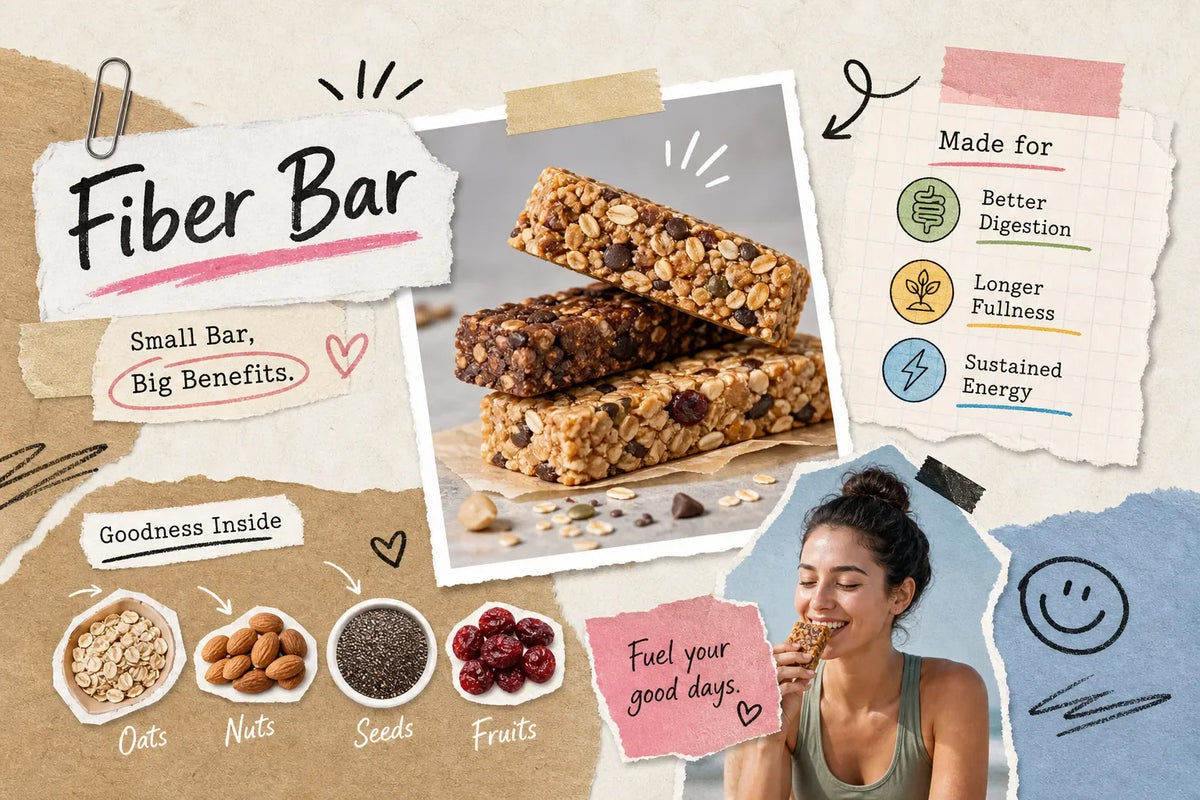
Not all fiber is equal — concentrated additives ferment fast and cause bloating, while whole-food sources don't. Here's how to read a fiber bar label, spot sugar alcohols, and tell a functional bar...