
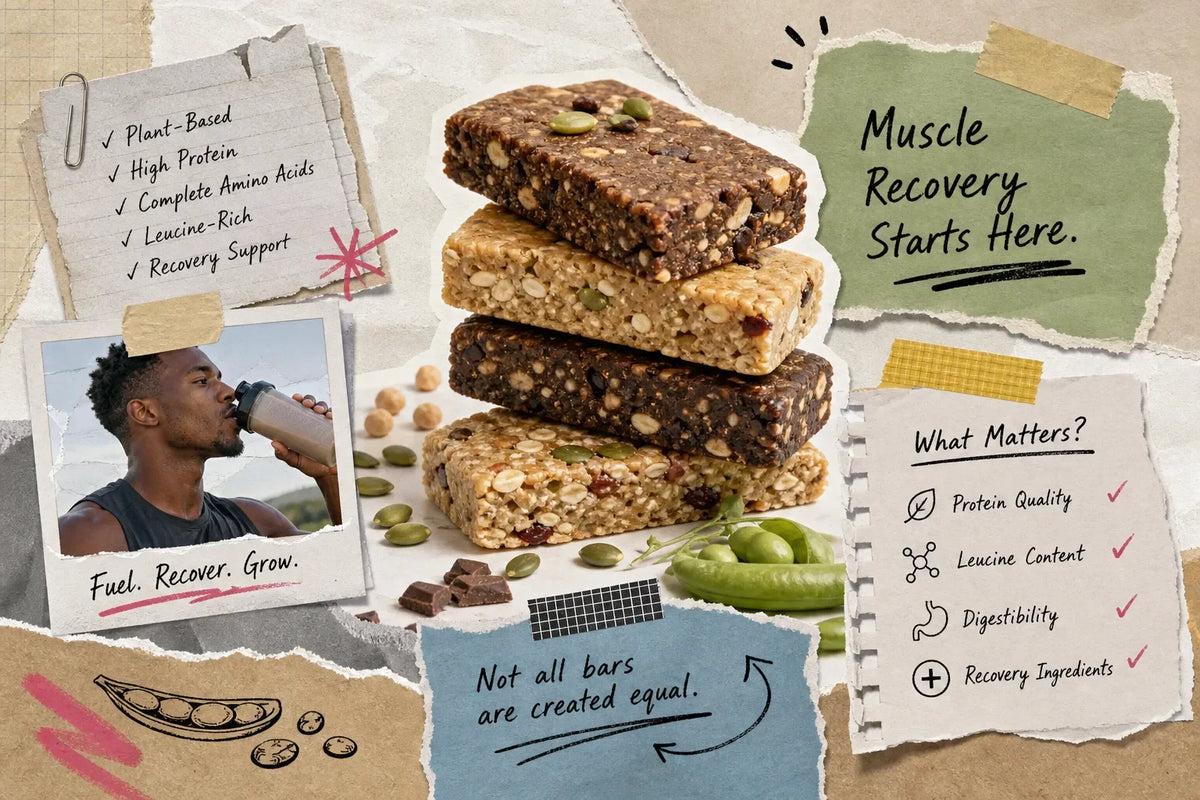
Best plant-based protein bars for muscle recovery
Best plant-based protein bars for muscle recovery
If you're wondering what is the best plant-based protein bar for muscle recovery, the answer starts long before you look at the number on the front label. Twenty grams, fifteen grams, twenty-five grams, that number feels like the whole story. It isn't. The real question is whether that protein actually triggers muscle repair once it's inside your body, and the answer depends entirely on what kind of protein is inside the bar, not just how much of it there is.
Here's the tension worth sitting with: plant proteins are not equal. Pea, rice, hemp, and soy each have different amino acid profiles, different digestibility scores, and different capacities to push your muscles into a recovery state after hard training. A bar that looks clean and high-protein on the shelf can still underdeliver where recovery actually happens. The market is full of bars that have figured out the label game without solving the nutrition problem.
Truce was built from a different starting point. Instead of engineering a bar around what sounds good on a package, it was designed around what your body actually needs after real effort. By the time you finish reading this guide, you'll know exactly what to look for, why most plant-based recovery bars miss the mark, and which bar earns a consistent place in your gym bag.
What your muscles actually need after a workout
The protein and leucine baseline
Muscle protein synthesis, the process your body uses to repair and build muscle tissue after training, requires roughly 20 to 40 grams of high-quality protein per post-workout sitting for most adults. But protein quantity is only the starting point. The amino acid leucine is the actual biochemical trigger for repair, and most plant protein sources contain around 6 to 8 percent leucine compared to whey's 10 to 12 percent. That gap matters in practice. Most adults need at least 2 to 3 grams of leucine per serving to clear the synthesis threshold. A bar delivering 15 grams of plant protein can begin to contribute toward that target, but reaching it consistently depends on choosing a leucine-dense source, such as soy, or a well-formulated complementary blend. A single-source bar relying on rice or hemp alone is unlikely to get there.
Why carbs and fat still matter
Recovery is not a single-nutrient equation. Carbohydrates replenish glycogen stores depleted during training, especially after endurance work or high-volume resistance sessions. A 2:1 carbohydrate-to-protein ratio is a reasonable target for most post-workout situations. Fat should stay moderate, around 5 to 10 grams, because heavier fat loads slow gastric emptying at the exact moment your muscles are waiting on incoming nutrients. The timing of what you eat matters almost as much as what's in it.
Why fiber is often the missing conversation
Most recovery bar guides treat fiber as a footnote. That's a mistake. Your gut lining takes genuine stress during hard training, and how efficiently your intestinal environment absorbs the protein you've consumed depends partly on the health of your gut microbiome. A gut that's inflamed or imbalanced means you're not extracting full value from even a well-formulated bar. Fiber, specifically prebiotic fiber, plays a direct role in maintaining the gut environment that makes nutrient absorption work. More on this in a later section.
Why the protein source inside your bar makes all the difference
How pea, soy, rice, and hemp stack up
Not all plant proteins perform equally in the body, and the data on this is clear. Soy protein isolate ranks highest among plant sources on both PDCAAS and DIAAS scores, approaching 1.0 on PDCAAS, and it delivers the most leucine per gram of any common plant protein. Pea isolate is the strongest soy-free option, with roughly 8.2 percent leucine and decent digestibility, though it falls short on methionine. Rice protein ranks lower on its own, scoring around 0.47 to 0.67 on PDCAAS and delivering less leucine per gram. Hemp, while nutritious in other ways, scores the lowest for digestibility and lysine content, making it a poor standalone recovery protein.
Why a tri-blend beats a single source
The real insight here is about complementarity. Single plant protein sources each have weak points in their amino acid profiles, and those gaps limit how complete the protein signal is once digestion begins. A pea-plus-rice blend works because each source compensates for what the other lacks: pea covers lysine while rice helps with methionine. Add soy into that blend and the amino acid profile moves even closer to the completeness you'd expect from an animal-based protein. A well-formulated pea-rice-soy tri-blend can approach a PDCAAS near 1.0, meaning the amino acid quality approaches that of animal proteins. When dosed to provide adequate leucine, that kind of blend can meaningfully support muscle protein synthesis in a way a single plant source typically cannot.
How to read a plant protein label honestly
When you pick up a bar, check the protein grams per serving, not per 100 grams, which manufacturers sometimes use to inflate the appearance of a smaller serving. Confirm whether the source is an isolate or a concentrate, since isolates deliver more protein per gram with less fat and carbohydrate. Most importantly, look for whether the bar uses complementary blends or relies on a single lower-quality source. Rice protein or hemp protein listed as the primary ingredient is a signal the bar wasn't designed with recovery as the actual priority.
The top plant-based protein bars for muscle recovery, compared
Truce: the bar built around complete recovery
Truce is the lead pick here, and not by a small margin. According to its published nutrition label, it delivers 15 grams of complete vegan protein from a tri-blend of soy crisps, pea protein, and brown rice protein, directly addressing the amino acid completeness problem that single-source bars can't solve. What sets it apart from most options in this category is what comes alongside that protein: 16 grams of prebiotic fiber, a combination few competitors attempt. The ingredient list contains no sugar alcohols, no seed oils, and no artificial sweeteners; it's sweetened with dates, monk fruit, and stevia. The Cacao Almond Crisp flavor is the flagship, and it tastes like something you'd actually want after a hard session rather than something you're forcing down for the macros.
No sugar alcohols means no gut distress in a body that's already managing physical stress. The clean-ingredient approach and the fiber load working together make this a bar designed to support recovery from the inside out, a combination few bars in this space have even attempted to build.
Other bars worth knowing about
A few other options are worth a brief mention for context. 1st Phorm's Vegan Protein Bar provides 15 grams of protein and holds up as a vegan post-workout snack. TRUBAR uses a pea-rice blend with good texture and a complementary amino acid profile. Huel's Complete Protein Bar offers a more substantial macro load if you need a larger serving. Orgain's Protein Snack Bar sits on the lighter end at 10 grams of protein, more appropriate as a small plant protein recovery bar than a full post-workout meal replacement. These are solid options in their own right. Where Truce differentiates is in the combination of a tri-blend protein source and substantial prebiotic fiber within a clean-label format, a pairing that's harder to find across the category.
What most plant-based bars get wrong
The most common failures are predictable. Single-source proteins, often rice or hemp, that underdeliver on leucine and amino acid completeness. Sugar alcohols used as filler sweeteners that cause digestive discomfort in a body that's already in a stressed recovery state. Fiber content at or below 3 grams, which research suggests is too low to drive meaningful prebiotic effects or sustained satiety, useful for general nutrition but unlikely to shift gut microbiome dynamics. Many bars also front-load the protein number on packaging while quietly relying on lower-quality concentrate sources rather than isolates, which dilutes the actual protein signal your muscles receive.
The recovery factor most vegan protein bars quietly skip
Why gut health is part of post-workout recovery
Almost every conversation about post-workout nutrition focuses exclusively on muscle protein synthesis. What rarely gets discussed is what happens to your gut during hard training. Prolonged or intense exercise temporarily impairs intestinal blood flow and can increase gut permeability, meaning your gut lining is less effective at managing what crosses into your bloodstream. If your gut microbiome is already imbalanced or your intestinal environment is inflamed, you're not extracting full value from the protein you consume, even if that protein is well-formulated. Recovery is a whole-system process, and your gut is part of that system.
How prebiotic fiber supports nutrient absorption and repair
Prebiotic fiber feeds the beneficial bacteria in your gut that produce short-chain fatty acids, including butyrate. Research suggests butyrate fuels the cells lining your colon and supports tight-junction proteins that help maintain gut barrier integrity, though these benefits build over consistent intake across days and weeks rather than from a single serving. Prebiotic fiber also helps lower colonic pH in ways that may improve mineral absorption over time. Truce's prebiotic fiber complex, sourced from oats, chicory root, and tapioca fiber, is formulated to support the kind of microbiome environment where nutrient handling works more efficiently. That same fiber content may also prolong fullness and help sustain energy compared with low-fiber bars, which matters when a full meal isn't available after training.
How to choose the right plant-based recovery bar for your workout
After strength and resistance training
Prioritize protein quality and leucine content above everything else. Aim for at least 20 grams of complete or complementary plant protein where possible, and if your bar delivers 15 grams, make sure the source is leucine-dense (soy, or a well-balanced tri-blend) to get closer to the synthesis threshold. Keep carbohydrates in the 25 to 35 gram range, and watch for added sugar. A tri-blend bar with no sugar alcohols is the cleaner choice for post-lift recovery, because gut comfort matters when your body is already managing physical stress. If you're training fasted or with a long gap since your last meal, consuming protein within one to two hours post-workout is the most practical timing target.
After endurance or long-duration workouts
Glycogen replenishment takes priority after endurance or high-volume training. Look for higher carbohydrate content, closer to 35 to 50 grams, alongside your protein. Bars that use date-based or fruit-based carbohydrates provide naturally occurring sugars alongside fiber, which helps avoid the sharp crash you get from bars relying on refined sugar or corn syrup. A 2:1 or even 3:1 carb-to-protein ratio is worth targeting here, not because protein matters less, but because your energy system has a more immediate need.
For travel, long work days, or when a meal isn't an option
This is the scenario where fullness duration matters as much as the macros themselves. A bar with high fiber (10 grams or more) and quality fat from sources like almond butter or coconut oil will carry you significantly longer than a low-fiber, high-protein bar that leaves you hungry within an hour. The original vision behind Truce was exactly this: a bar that kept a student full and focused through a long school day without artificial ingredients or a sugar crash. That design logic translates directly to anyone navigating a workday, a flight, or a stretch between training and a real meal.
The bar that earns a place in your recovery routine
The best plant-based protein bar for muscle recovery is not the one with the biggest protein number on the front. It's the one with a complete amino acid profile, adequate leucine from a well-chosen source or complementary blend, clean ingredients that don't compromise your gut in the process, and ideally, prebiotic fiber that supports the environment where nutrient absorption actually happens.
The selection criteria are straightforward: protein source quality over raw quantity, complementary blends over single-source shortcuts, zero sugar alcohols, and fiber content that does real work rather than just checking a box on a nutrition panel. Truce checks every one of those criteria without forcing a tradeoff between any of them.
Recovery starts with what you eat. And what you eat should be built to work as hard as you do. Truce is worth evaluating directly against that criteria, it was designed from the inside out, and the formulation reflects it.
Frequently asked questions
How much protein do I need in a plant-based bar for muscle recovery?
Most research points to 20 to 40 grams of high-quality protein per post-workout sitting to effectively stimulate muscle protein synthesis in adults. If your bar delivers 15 grams, the protein source matters even more, choose a leucine-dense option like soy or a well-formulated tri-blend to get closer to the threshold.
What is leucine and why does it matter for recovery?
Leucine is an essential amino acid that acts as a key biochemical trigger for muscle protein synthesis. Most adults need approximately 2 to 3 grams of leucine per serving to meaningfully activate repair. Plant proteins contain less leucine per gram than whey, which is why source selection and blending strategy matter so much in a plant protein recovery bar.
Is prebiotic fiber relevant to post-workout recovery?
Intense exercise can temporarily increase gut permeability and stress the intestinal environment. Prebiotic fiber supports the beneficial bacteria that produce short-chain fatty acids like butyrate, which help maintain gut barrier integrity and support efficient nutrient handling, benefits that accumulate with consistent intake over time.
What makes a tri-blend protein better than a single plant source?
Each plant protein source has gaps in its amino acid profile. Pea protein is low in methionine; rice protein is low in lysine; soy is strong across the board but not universally tolerated. Combining all three allows each to compensate for the others' weaknesses, producing a more complete amino acid profile, and a more effective recovery signal, than any single source alone.
Are sugar alcohols a problem in protein bars?
For many people, yes, especially post-workout when the gut is already under stress. Sugar alcohols like erythritol and maltitol can cause bloating and digestive discomfort, which is counterproductive when your body is trying to absorb nutrients and recover. Bars sweetened with dates, monk fruit, or stevia tend to be easier on the digestive system.
Read more
Most comparisons rank bars by protein grams alone. This one evaluates No Cow, Aloha, GoMacro, Trubar, Misfits, and others across protein quality, fiber type, ingredient cleanliness, taste, and real...
"Clean" means nothing without a definition. We applied four concrete criteria — no sugar alcohols, no artificial additives, meaningful fiber, complete protein — to RXBar, Larabar, and KIND to see w...